by
by To travel around the world, it takes some money to make it happen. It’s not obvious. It requires some financial resources. Like any project, you need a plan, and once you have one, it becomes very achievable. There are a few strategies, and we are going to share ours with you.
First, you need to accumulate money
To save money, it’s simple: you must spend less than you earn. And to make sure of that, you have to CAL-CU-LATE everything. Yes. Everything. That’s the only way.
Virtual bank account
Open a virtual bank account (if your bank allows it). Open an account with Tangerine or another financial institution that lets you give names to your accounts. This step is very important because you must not use this money for your everyday expenses. This is money you are saving for your trip! It must be protected!
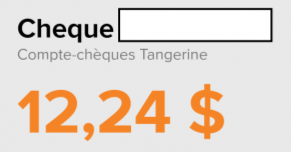
You have to start somewhere!
Make a budget
Income
Calculate how much money you earn. “I earn $54,000 a year” is not enough. Take out all your pay stubs. Calculate your income for each paycheck after deductions. If you are paid every two weeks, multiply by 26 to get your annual amount. Personally, I calculate everything in a Google Sheets spreadsheet, which allows me to predict cash inflows for the current year and future years.
Don’t forget to include all government credits: GST and QST credits, child assistance (Quebec), Canada Child Benefit, QPP (if you are retired!), etc.
Also, if you usually receive a tax refund, try to anticipate it and add it to your income section. Even better, adjust the deductions on your paycheck so that you don’t get a tax refund; this frees up that money immediately.
Expenses
This part is much less obvious. There are a few strategies if you’re not a compulsive buyer.
- Use your credit card for all your expenses; this allows you to track your spending by category.
- Use software such as Mint, Personal Capital, or YNAB to automate the tracking of your expense categories, both for your credit cards and your checking accounts.
- Try as much as possible not to pay in cash, because otherwise it becomes difficult to track that money.
Now that you know exactly what you earn and what you spend, convert your annual expenses into monthly expenses by dividing by 12. That gives you your monthly expenses. Then take your biweekly income and multiply it by 2.16 to get your net monthly income.
Alright, you have both numbers now? Subtract one from the other: that’s your monthly savings. If it’s negative, you’re off to a bad start! Is it positive? Good. Let’s say it’s $500 positive and your around-the-world trip is budgeted at $50,000—you’ll be ready to leave in 50,000 / 500 = 100 months, or 8.3 years. Oops! You want to leave sooner than that? Then there’s no choice—you have to use other strategies.
Cut expenses
Look at all your expenses. Some are necessities (food, housing, transportation), but others are luxuries (electronics, entertainment, clothing, etc.). Look at everything. Can you take public transportation? Can you sell your car? Move somewhere cheaper? Everything has to be questioned. The goal of this exercise is that it’s much easier to reduce expenses than to increase income. Every $20 you manage to cut goes directly into your travel budget.
Do not go into debt for the trip. That would be a huge mistake, because you would only be pushing the repayment of the trip into the future, with very high interest fees that would poison your life. If you are currently in debt, I strongly recommend reducing it as much as possible before embarking on this adventure.
Increase your income
The best way to increase your income is to change jobs. You need to know your value. You need to be mobile. Physically mobile—change cities, change countries. Career-wise—change fields. Within your field—change roles, get a promotion, etc.
If changing jobs is impossible, you can negotiate a raise or see if other positions are available within your company. You can also work toward a promotion. Don’t forget bonuses! If all of that is impossible, see if you can earn additional income. You can sell items on Amazon, eBay, Kijiji, etc. If you have free time, you can even take a second job—but be careful about overworking yourself!
Invest surplus money in relatively safe investments
When you accumulate money, make it grow. Over the long term, the best investment is the stock market, but if you need this money within the next 10 years, there are some much less risky options:
- Savings accounts: make sure you get the best rate on the market.
- Treasury bills and certificates of deposit (GICs/CDs): they guarantee a fixed rate for a set period (6 months, 1 year, 2 years, 3 years, 5 years, 10 years, 30 years). The downside is that you must commit to the term and there are penalties for early withdrawal.
Departure date in the middle of the year
Taxes are progressive. If you can, it’s ideal to start your trip after you’ve received half of your annual salary. It’s better to take a 1-year trip spread over 2 calendar years (for example, July 2020 to June 2021) rather than a trip contained within a single year (e.g., January 2020 to December 2020). The reason is simple: because of the progressive tax system, this greatly reduces your tax burden for both years. In total, you earn the same gross salary, but you pay much less in taxes. Do the math—you’ll be surprised!
We will be spreading our income over two years, which allows us to reduce our taxes to almost $0.
Credit card points and bonuses
Many credit cards offer various discounts, some directly as cash back (0.5% to 2%). Others offer points with varying values (from 0.5 cents per point to 1.2 cents). You need to shop around. Some cards are tailored to specific airlines, others are not. Some cards also give you higher status with hotels and airlines. Do your research—there is a lot of information on this topic.
Hilton Honors loyalty program
Here’s how I optimize the Hilton Honors program:
- I have an American Express Hilton Honors credit card. It gives 7.2% back in points on Hilton bookings.
- I obtained GOLD status with Hilton through my employer. This gives 18 Hilton Honors points for every dollar spent at hotels, equivalent to a 10.8% discount.
- I am going to activate a new credit card that grants DIAMOND status, which gives a 12% discount, plus a host of benefits such as room upgrades, premium Wi-Fi, the 5th night free, etc.
When I book a room, I earn 18% back in points, which I can then use for free nights, and I get the 5th night free. So:
- 22 nights earn me enough points for 5 free nights, which is a 23% discount.
Points have a variable value depending on the type of hotel, so it’s best to compare each time.
You can find more information about the program here:
https://hiltonhonors3.hilton.com/en/explore/benefits/index.html
Sign up for new credit cards
Before and during the trip, look for sign-up bonuses on credit cards. Often, these cards require a minimum amount of spending. Try to time your expensive purchases, such as airline tickets. This way, you can align those purchases with signing up for a new card. Some of these bonuses are very generous—over $300!
I have an offer for the American Express Platinum card. I plan to sign up just before the start of the trip and put our initial expenses on it. The card offers several benefits:
- Access to airport lounges
- 5% back on flights
- $200 airline credit
- $600 bonus in the first year
- $200 annual Uber credit
All this despite a very high annual fee ($550).
Conclusion
Unless you win the lottery, there are no miracle ways to accumulate money for a trip. You need a goal, a plan, and the means to carry it out. Best of luck to everyone!